
TEXTILE TERRAINS: THE HIDDEN GEOGRAPHIES OF FASHION OVERCONSUMPTION
FRIDAY 20 FEBRUARY – FRIDAY 13 MARCH
TALK
Textile Terrains is an exhibition and panel discussion examining environmental consequences of the transnational second-hand clothing (SHC) trade to highlight a pressing question in fashion today: why we need to buy less.
Australians purchase an average of 55 new items of clothing each year and 87% donate their surplus SHC for reuse. Two-thirds of donations are exported through a transnational trade network that moves SHC from wealthy nations to lower-income countries across Africa, Asia, and South America. In Ghana’s Kantamanto Market, west Africa’s largest SHC trading hub, around 15 million garments arrive each week. Exported in wearable condition, their sheer volume and low quality mean an estimated 40% are unsellable and can become waste, forming hazardous textile terrains where waste infiltrates soil, waterways, and ecosystems.
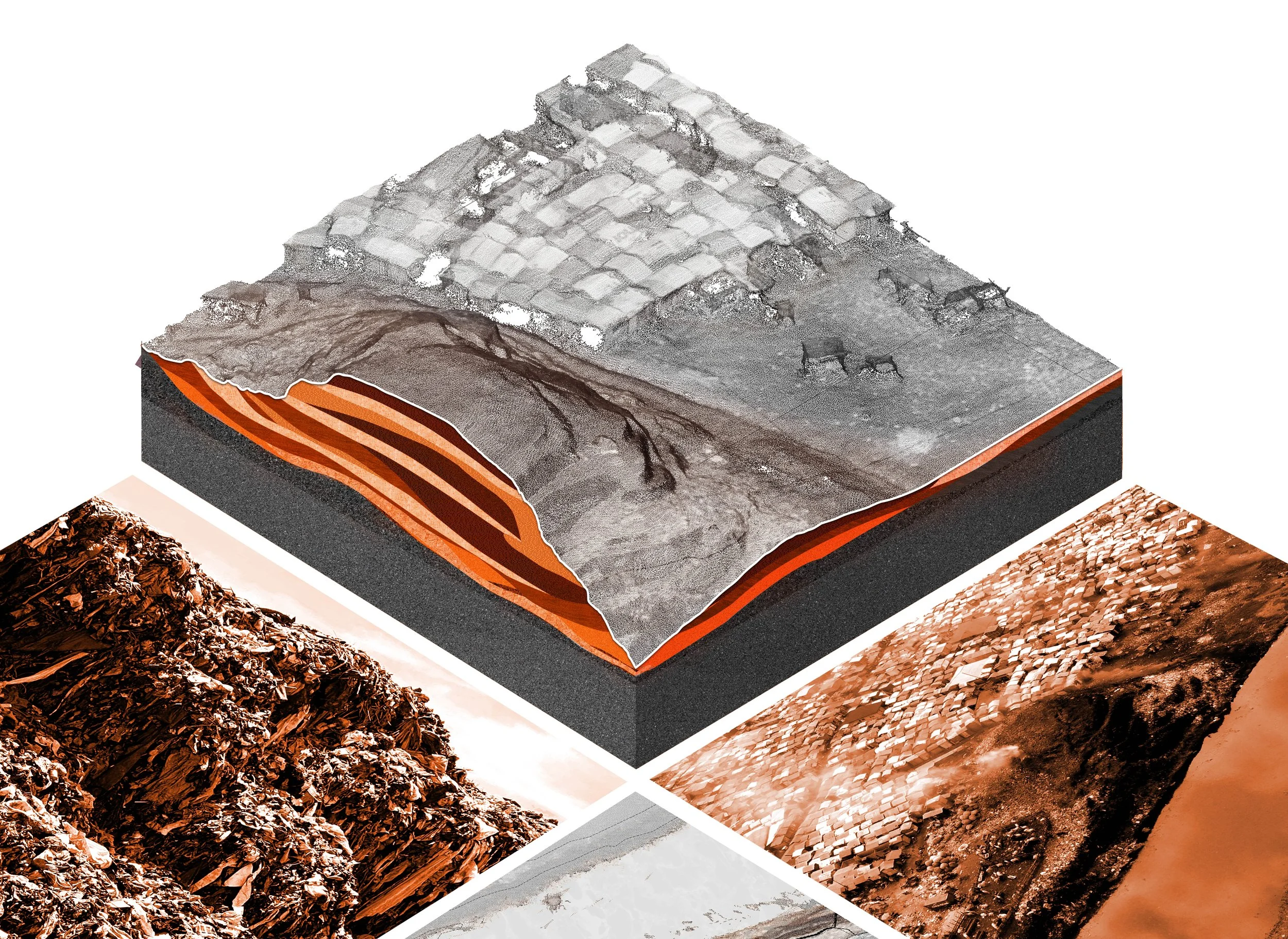
The exhibition presents open-source investigative research from the Textile Terrains project at RMIT University. Combining trade mapping, satellite imagery, terrain models, and field documentation from Accra, Ghana, it explores Australia’s role in this global system and exposes the uneven consequences of fashion overconsumption.
The accompanying panel discussion brings together researchers, policy thinkers, and NGOs to address why we need to buy less. It situates overconsumption within broader systems of overproduction, trade inequity, and waste colonialism, and considers the social, cultural, and regulatory changes needed to slow the relentless acceleration of fashion.
RMIT Design Hub, Cnr Victoria & Swanston Streets, Carlton
Free to attend. Bookings required.
-
Exhibition Launch & Panel Discussion
Friday 20 February: 6:00pm-7:30pm
Exhibition open to public
Monday 23 February – Friday 13 March
Weekdays: 9:00am - 5:00pm -
Accessible for wheelchair users
-
The Textile Terrains Research Team is an interdisciplinary collective from RMIT University’s Schools of Fashion & Textiles, Architecture & Urban Design, and Law. Their collaborative work investigates the global geographies of textile waste, linking design, policy, and environmental justice through research, visualisation, and public engagement.
-
For more information, please contact the event organiser:
Textile Terrains Research Team
RMIT University
yassie.samie@rmit.edu.au