
FASHION FORMATIONS: THE ART OF DART MANIPULATION FROM THE 1940s
THURSDAY 19 FEBRUARY
9:30AM – 4:30PM
WORKSHOP
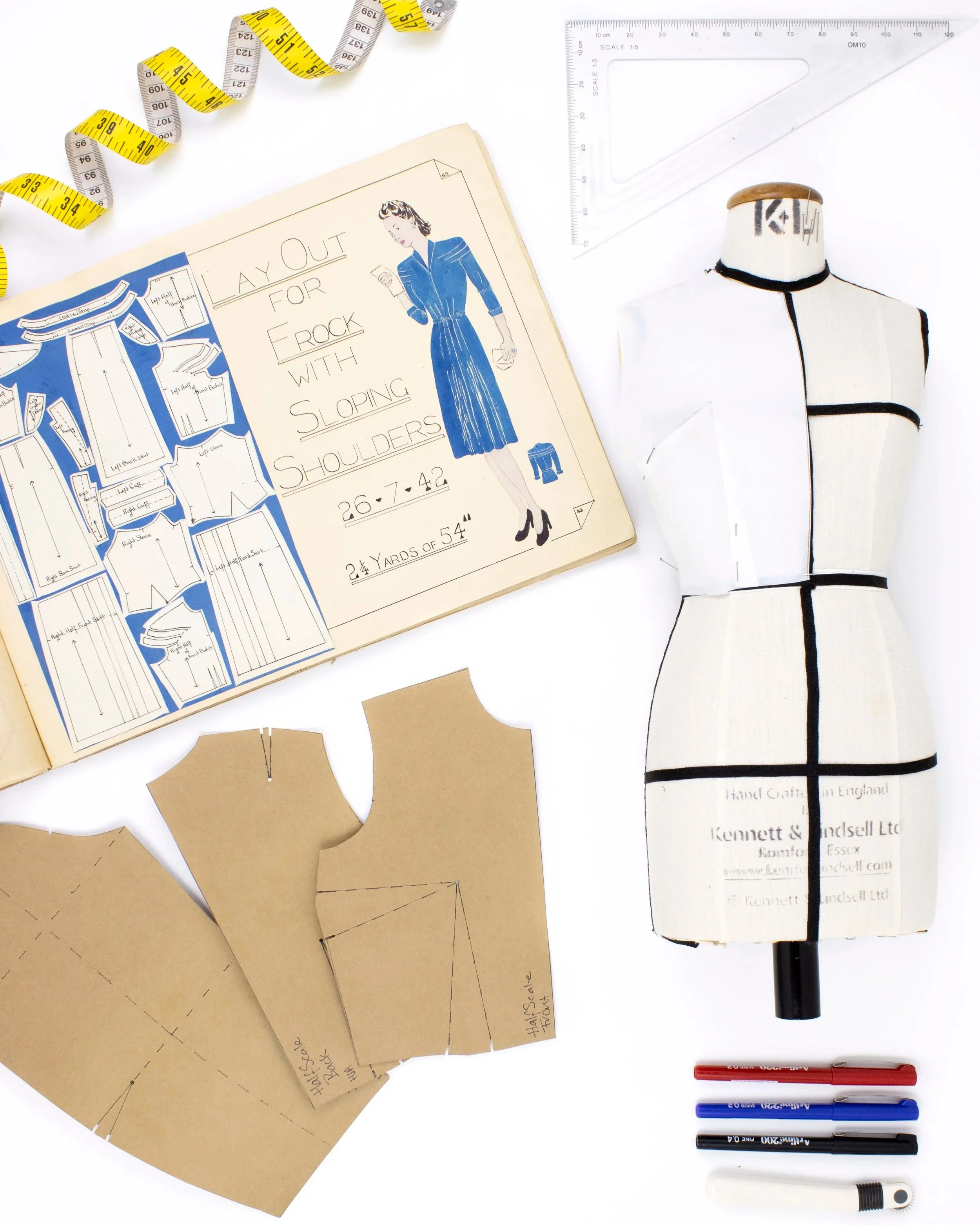
This workshop commences with a presentation of the Lorna Clarke Collection, a historically significant archive held by RMIT Design Archives. Developed by a fashion student at the Emily McPherson College of Domestic Economy in the early 1940s, this fascinating collection of workbooks offers a rare glimpse into fashion education practices of the era. The workbooks embody the ingenuity and resourcefulness of the Make-Do-and-Mend ideology prevalent during wartime, with designs reflecting the silhouettes, detailing, materials, and colour palettes characteristic of the 1940s.
During the presentation, participants will have the chance to examine copies of the original illustrations and notes, which reveal the creative process and technical skills employed by students at the time. These materials provide valuable visual examples of the relationship between fashion illustration, drafting, and the creation of physical patterns that constitute the foundation of garment construction.
Building on this historical context, the workshop then becomes hands-on, as participants are introduced to essential principles of pattern drafting and pattern cutting. Using a selection of Clark’s original designs, attendees will learn about dart manipulation, working with full-scale bodice blocks to replicate notable pieces from the collection. Participants will also experiment with scaled blocks—at quarter, and half scales—as templates to develop drafts.
Key techniques to be explored include slashing and opening, slashing to close, and redistributing primary darts to create new seamlines, tucks, and gathers. By engaging with these practical methods, participants will develop an understanding of how blocks are used in the development of drafts, translating design ideas from fashion illustrations into patterns ready for garment construction. Reflecting on both the dress designs and the pattern drafts from the 1940s, participants are encouraged to consider how historic techniques—alongside their own developing skills—can inspire and inform their personal design practice when creating contemporary fashion and dress.
516.001.004 (Studio One), School of Fashion & Textiles, RMIT Brunswick, 25 Dawson St, Brunswick
Tickets $250
-
Venue accessibility information
Accessible for wheelchair users
Tactile experience available
Quiet space available on premises -
Dr. Deborah Wills-Ives is a fashion academic at RMIT University, specializing in the analysis of fashion design education. Her creative practice incorporates slow design principles to support creative outcomes, focusing on repair, remaking, and repurposing cloth from discarded garments to inform her design, pattern cutting and making process.
-
For more information, please contact the event organiser:
Dr Deborah Wills-Ives
deborah.wills-ives@rmit.edu.au