
DESIGNING WITH WOOL: THE AUSTRALIAN WOOL BOARD'S GLOBAL FASHION IMPACT
WEDNESDAY 18 FEBRUARY
11:00AM
TALK
Join us for an insightful panel discussion about how fashion designers and manufacturers have championed Australian wool locally and on the global stage. Discover the innovative ways leading designers have elevated this iconic Australian fibre and contributed to Australia’s fashion legacy.
In the panel discussion, Dr. Lorinda Cramer (Deakin University) and Professor Sarah Teasley (RMIT University) will share their research into the strategies used by Australian fashion designers, mills, manufacturers and the Australian Wool Board to elevate wool as a fashion fibre – both at home and abroad. They will explore the history of wool in Australian clothing manufacture and how its promotion transformed across the twentieth century, including into key fashion industries and markets like Japan. They will also examine the challenges posed by the rise of synthetic fibres in the mid-twentieth century and the impact of new ways of dressing and youth fashions.
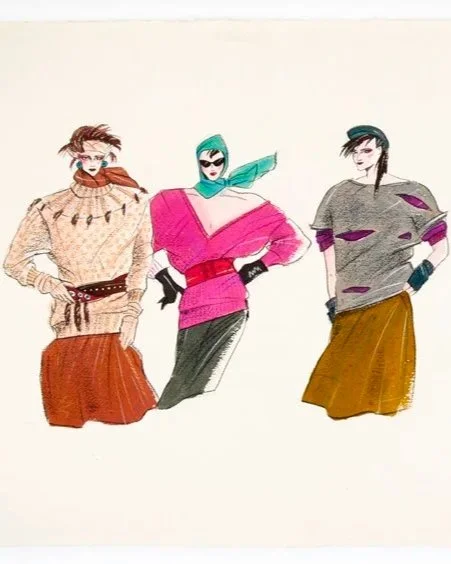
The event will take place in the RMIT Design Archives, where visitors will be able to view firsthand materials such as drawings, fabric samples, press clippings and meeting notes from the archives of prominent fashion designers such as Prue Acton, Rae Ganim, Clarence Hall Ludlow, Robert Maltus, Diane Masters, and Norma Tullo.
The RMIT Design Archives (RDA) holds a unique place among Australia’s collecting institutions for its exclusive focus on design practice across all disciplines. Its nationally significant collections of fashion and textiles trace the development of the Australian fashion industry from pre-Second World War to the 21st century.
RMIT Design Archives, Building 100, 154 Victoria Street, Carlton
Free to attend. Bookings required
-
-
Dr. Lorinda Cramer
Dr. Lorinda Cramer is a dress historian working at the intersection of social history, cultural history and material culture studies. Her innovative methodology draws upon on the materiality of museum objects to deepen insight into clothing’s connections with gender, race and class, to explore consumer preferences, and to interrogate fashion as a lived, worn experience. Her core interests include the experience of wearing wool and how the fibre was fashioned, particularly against the rise of synthetics in the twentieth century. Cramer’s current research also investigates wool's intersections with sustainable, circular fashion and wool 'waste' to offer a historical counterpoint for the present and future as Australia grapples with the environmental consequences and human toll of fast fashion.Her publications span Australia and overseas, notably "Needlework and Women's Identity in Colonial Australia" (Bloomsbury, 2020), as well as articles in leading history and heritage journals. She is a frequent media commentator on issues relating to Australian dress.
Professor Sarah Teasley
Professor Teasley is a leading scholar in design history and design research. Her research explores how designers, makers, and communities use emergent materials, technologies and concepts in everyday work. She is interested how the impacts of gender, class, disability and culture shape experiences and access, and how local creativity can thrive within transnational economic, information and power networks.Professor Teasley is co-lead of the RMIT Born Digital Cultural Heritage lab, part of the ARC-funded AusEaaSI, the Australian Emulation Network. Her current research projects include an exploration of how Australian and Japanese designers and architects have integrated digital tools and workflows into their practice.
Recognised as a leading design researcher in the Asia-Pacific, Professor Teasley regularly delivers invited talks, panel discussions, and keynotes around the world, including in Turkïye, India, Japan, France, and the UK. Her publications include "Designing Modern Japan" (Reaktion 2022) and "Global Design History" (Routledge 2011), as well as numerous book chapters and journal articles.
-
For more information, please contact the event organiser:
RMIT Design Archives
rmitdesignarchives@rmit.edu.au